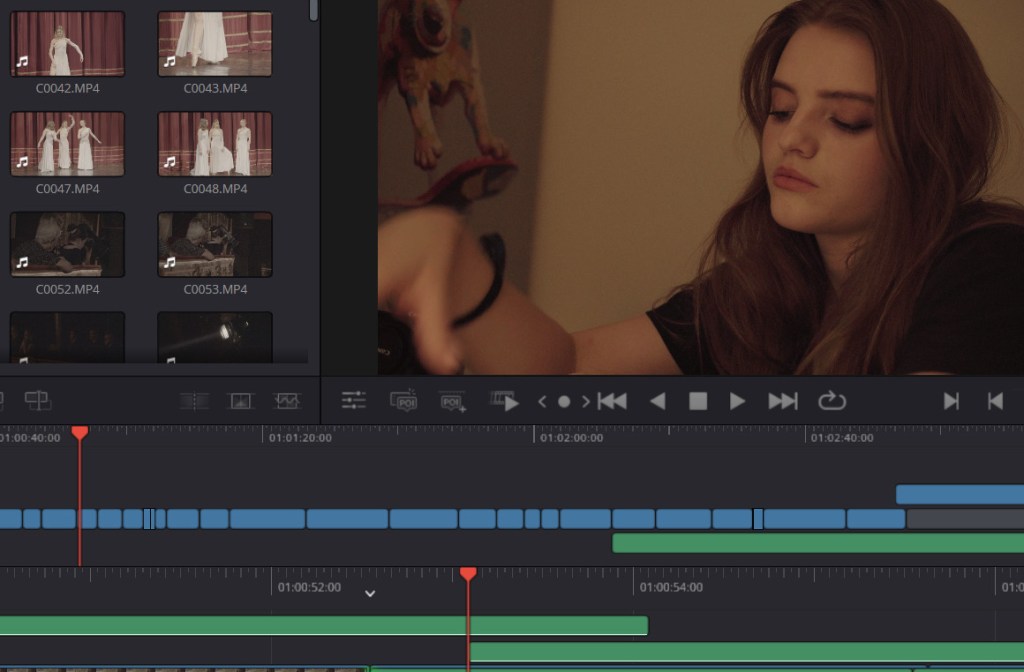
Editing played a crucial role in the movie See the Light, as it enhanced the visual storytelling as well as deepened the audience’s connection to Arias’ character development. Through carefully crafted cuts, transitions, and pacing, the editing emphasized the use of lighting as a symbolic element throughout the film.
I used the DaVinci Resolve system software to edit the entire short film. This is because I find it one of the best programs for altering the lighting in post-production. Throughout the film, I focused on enhancing the color tone of each sequence to emphasize the emotions felt in that moment.One of the key aspects of my color grading process was adjusting the contrast and exposure levels to create a more cinematic look. I used the Curves tool to fine-tune highlights and shadows, ensuring the lighting felt natural while also having a dramatic feeling. By carefully balancing the RGB channels, I was able to enhance the mood—warming up scenes for a more intimate or dream like feeling and cooling them down for tension or melancholy. Moreover, Scopes helped monitor the luminance and color distribution, making sure that no details were lost in the highlights or shadows. The Soft Clip adjustments helped refine the edges of my highlights and shadows, preventing overexposed or crushed blacks. I also used nodes to separate different elements in a scene, correcting details in backgrounds or key light sources.

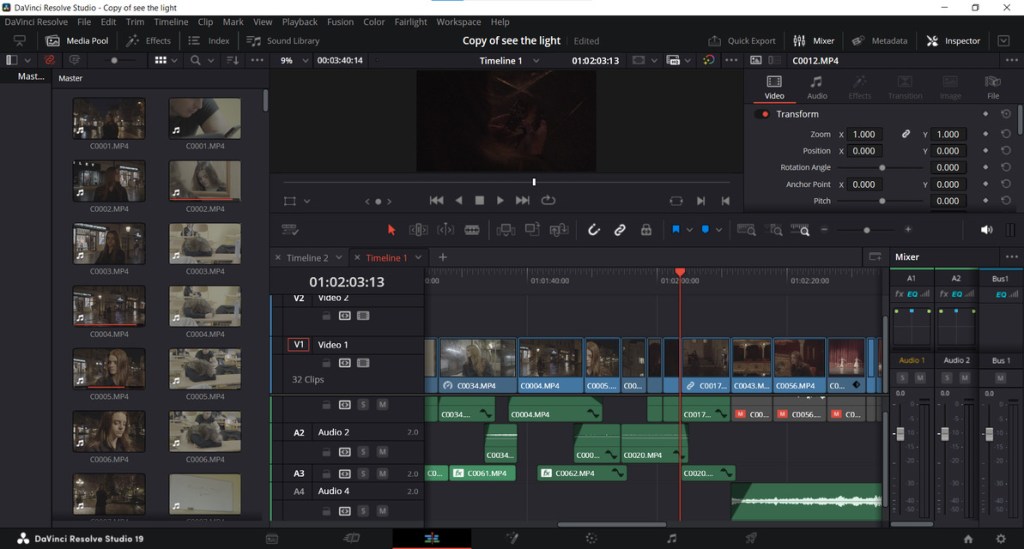
A significant part of my editing process involved arranging clips on multiple tracks to ensure a smooth and cohesive narrative flow. The screenshot shows two video layers (V1 and V2),used for overlay effects and cutaway shots, as well as multiple audio tracks (A2, A3, A4) for dialogue, sound effects, and music. I included many side effects like rain or the tram to create a more natural effect to make it more realistic for the audience. Furthermore, I used the Inspector panel to refine clip properties like zoom, position and rotation, ensuring that each shot was framed correctly and aligned with the film’s visual style. The Mixer panel allowed me to adjust audio levels, making sure dialogue was clear and sound elements blended well.
The music in See the Light plays a big part in setting the mood and emphasising the film’s artistic themes. A classical piece was chosen to highlight the elegance of ballet and the deepermeaning of art in the story. In the scene when Aria steps into the theater, the ballet dancers perform to Felix Mendelssohn’s Piano Quartet No. 2 in F Minor, Op. 2: III. Intermezzo. Allegro Moderato.The piece has a delicate yet expressive feel which enhances the scene’s atmosphere, evoking a sense of nostalgia and refinement. Mendelssohn’s composition, known for its complex melodies strengthens the link between classical music, ballet, and Aria’s journey.
 Natalia’s Blog